



BACKER ROD FOR EXPANSION JOINTS AND GAPS BASE ROD
How to fill an expansion joint before sealing
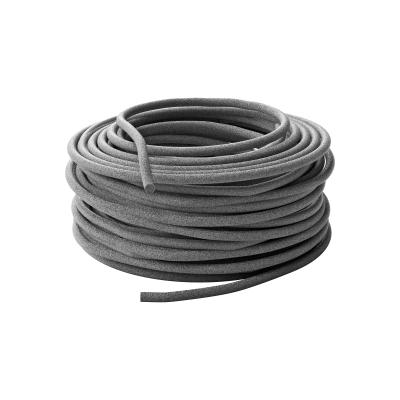
BASE ROD is Rothoblaas’ closed cell backer rod made of polyethylene foam, designed to fill an expansion joint or gap before applying sealants.
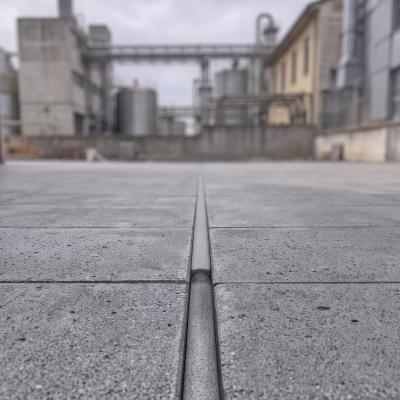
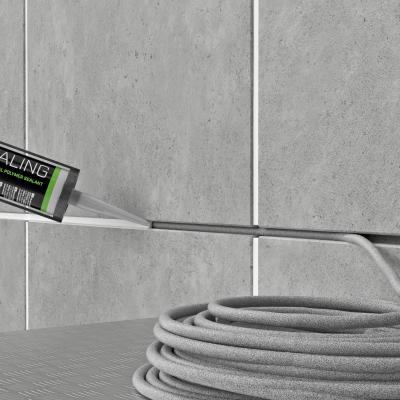
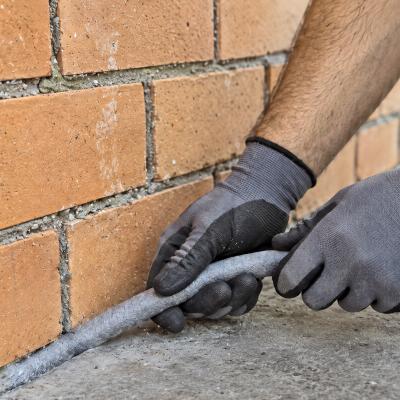
The backer rod is press-fitted into the expansion joint to define the sealing depth. The sealant is then applied over BASE ROD at a thickness proportionate to the width of the joint. This allows the joint sealant to work only between the two sides of the joint, deforming as the building elements move while keeping the amount of sealant required under control.
BASE ROD is suitable for façades, joints between windows and masonry, prefabricated elements, flooring and waterproof structures. For indoor and outdoor floor expansion joints, it fills the joint cavity before sealing. In connections between windows and walls, the sealant backer rod provides support for the sealant.
The backer rod is available in five diameters, from 8 to 25 mm, to accommodate gaps of different widths and ensure uniform contact with the joint surfaces. It can be combined with products from the sealants, foams and liquid membranes range, such as MS SEAL expansion joint caulk. Material compatibility and suitability must be verified according to the specific project requirements.
Closed cell polyethylene foam backer rod: characteristics and diameters
BASE ROD is made of closed cell polyethylene foam with a density of 23 kg/m³. The material offers high elasticity, recovery after compression and long-term durability, essential properties for construction sealing. It has a temperature resistance of 70 °C (NF DTU 44.1), the recommended compression during installation is 25%, and reaction to fire depends on the sealant applied.
The backer rod complies with the requirements of DIN 18540, NF DTU 44.1 and RAL, allowing its use in different countries.
The range includes five backer rod sizes (B), each with a recommended expansion joint or gap width (b):
— BASER8100: Ø 8 mm · 5–6 mm joints · 100 m roll
— BASER10100: Ø 10 mm · 7–9 mm joints · 100 m roll
— BASER15100: Ø 15 mm · 10–12 mm joints · 100 m roll
— BASER2050: Ø 20 mm · 13–16 mm joints · 50 m roll
— BASER2550: Ø 25 mm · 17–20 mm joints · 50 m roll
The sealant depth (h) recommended by Rothoblaas is 6 mm for joints less than 10 mm wide, 8 mm for 15 mm joints, and 10 mm for 20 mm joints. Each package contains one roll. Waste classification (2014/955/EU): 17 02 03.
How do you seal expansion joints in outdoor flooring?
Insert the backer rod into the joint to the required depth, then apply the sealant over the rod. The backer rod controls the thickness of the sealant and allows it to deform as the flooring moves. BASE ROD is made of closed cell polyethylene foam, is installed with 25% compression, and withstands temperatures up to 70 °C (NF DTU 44.1).
What backer rod diameter is required for concrete expansion joints?
The backer rod for concrete should have a diameter greater than the width of the joint so that it remains compressed within the joint. For BASE ROD, the recommended compression is 25%. The recommended sizes are: Ø 8 mm for 5–6 mm joints, Ø 10 mm for 7–9 mm joints, Ø 15 mm for 10–12 mm joints, Ø 20 mm for 13–16 mm joints, and Ø 25 mm for 17–20 mm joints.
What are expansion joints and what is a backer rod used for?
Expansion joints are intentional gaps between building elements designed to accommodate movement caused by temperature changes and material shrinkage. A backer rod is inserted into the joint before the sealant is applied, defining its depth and providing support during application. BASE ROD performs this function in façades, windows, prefabricated elements and flooring, with five diameters ranging from 8 to 25 mm.
How deep should the sealant be in a joint?
The required sealant depth depends on the width of the joint. For BASE ROD, the recommended depth is 6 mm for joints less than 10 mm wide, 8 mm for 15 mm joints, and 10 mm for 20 mm joints. Installed with 25% compression, the backer rod maintains the required sealant depth within the joint. Material compatibility and the suitability of the solution must be verified for the specific project.
Documents
-
Technical data sheets
- Technical data sheets Croatian
- Technical data sheets Czech
- Technical data sheets English
- Technical data sheets French
- Technical data sheets German
- Technical data sheets Greek
- Technical data sheets Hungarian
- Technical data sheets Italian
- Technical data sheets Polish
- Technical data sheets Portuguese
- Technical data sheets Romanian
- Technical data sheets Russian
- Technical data sheets Slovenian
- Technical data sheets Spanish
BASE ROD
| CODE | B
[mm]
|
L
[m]
|
B
[in]
|
L
[ft]
|
pcs. | |
|---|---|---|---|---|---|---|
| BASER8100 |
New product
|
8 | 100 | 0.3 | 328 | 1 |
| BASER10100 |
New product
|
10 | 100 | 0.4 | 328 | 1 |
| BASER15100 |
New product
|
15 | 100 | 0.6 | 328 | 1 |
| BASER2050 |
New product
|
20 | 50 | 0.8 | 164 | 1 |
| BASER2550 |
New product
|
25 | 50 | 1 | 164 | 1 |
Technical Data
| Property | Standard | Tested Values | USC Conversion |
|---|---|---|---|
| Colour | - | grey | - |
| Density | - | 23 kg/m³ | - |
| Resistance to temperature | - | / 70 °C | / 158 °F |