

ALUMINIUM CONCEALED JOIST HANGERS ALUMIDI
Joist hangers: concealed connections for floors and roofs
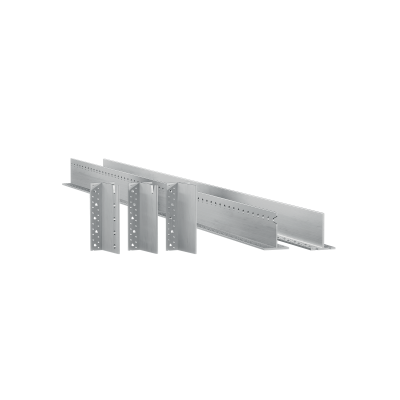
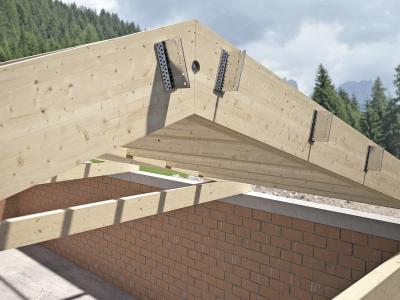
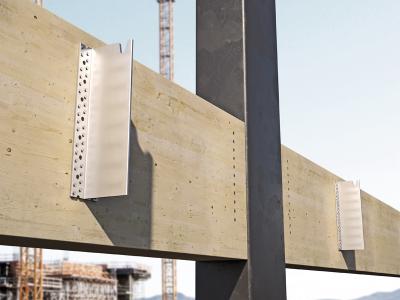
ALUMIDI is the joist hanger produced by extrusion in EN AW-6005A aluminium alloy, without welds. Designed for concealed timber-to-timber and timber-to-concrete connections, it is applied on softwood and hardwood solid timber, glulam, LVL and CLT. Suitable for medium-size floors and roofs, it is also used in post-and-beam structures and in non-aggressive outdoor environments. The concealed connection guarantees aesthetic continuity and satisfies fire resistance requirements.



ETA-certified joist hangers: resistances, versions and fastening systems
ALUMIDI concealed joist hangers are ETA-09/0361 certified with verified resistances in all directions (vertical, horizontal and axial), also for inclined beams and in seismic areas.
Available in three versions: without holes, with holes and with upper countersink for top-down installation
• 2200 mm long version, adaptable in length with 40 mm pitch
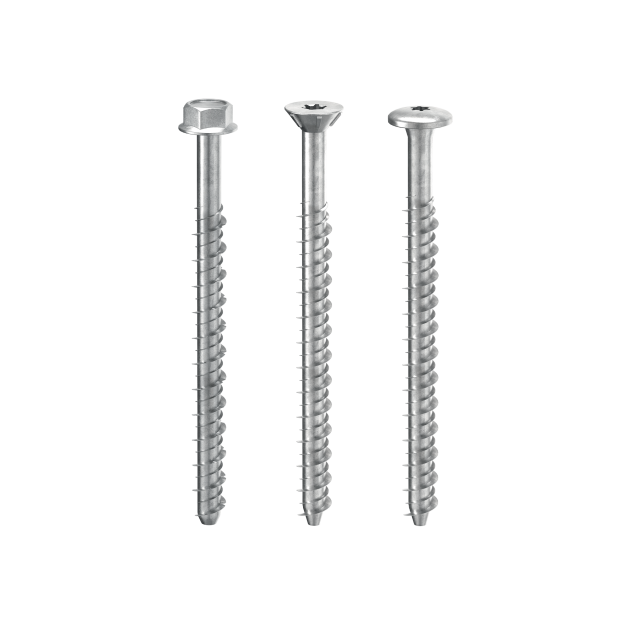
• Holes designed for fastening on different supports: timber with LBA nails or LBS screws, reinforced concrete with VIN-FIX chemical anchors, steel with bolts
• Compatibility with SBD self-drilling dowels, for greater tolerance on irregular surfaces
Concealed beam hangers: do they also work on concrete?
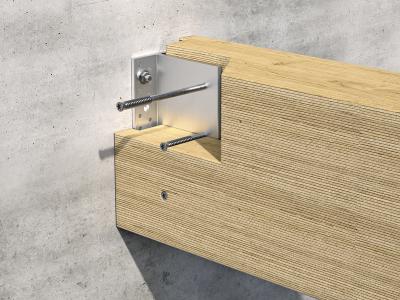
Yes. ALUMIDI is certified for both timber-to-timber and timber-to-concrete connections, with tested structural values for both configurations.
For fastening on concrete, VIN-FIX Ø8 chemical anchors are used according to ETA-20/0363, with INA threaded rods installed in alternating rows.
Alternative anchor systems calculated using MyProject software can be used.
Can concealed beam hangers be used with inclined beams?
Yes. ALUMIDI can also be used with inclined beams, where loads combine rather than act in one direction only.
Resistances are also verified for non-perpendicular configurations, making the system suitable for pitched roofs, three-dimensional frames and prefabricated structures.
The connection design must be verified according to the inclination angle and constraints.
How are joist hangers installed in prefabrication?
Joist hangers are generally installed during prefabrication, with precise machining on timber elements allowing correct fitting on site.
Installation follows defined sequences and requires compliance with the specified dimensions and insertion depths to ensure proper load transfer.
Documents
-
Technical data sheets
- Technical data sheets Croatian
- Technical data sheets Czech
- Technical data sheets English Eurocode 5
- Technical data sheets English USA NDS
- Technical data sheets French
- Technical data sheets German
- Technical data sheets Greek
- Technical data sheets Hungarian
- Technical data sheets Italian
- Technical data sheets Polish
- Technical data sheets Portuguese
- Technical data sheets Romanian
- Technical data sheets Russian
- Technical data sheets Slovak
- Technical data sheets Slovenian
- Technical data sheets Spanish
-
ETA Certificate
-
File CAD
-
Files for Concrete Anchors
-
File BIM.ifc
-
File BIM.rfa
ALUMIDI WITHOUT HOLES

ALUMIDI WITHOUT HOLES WITH UPPER COUNTERSINK