


Introduction of EN 17235:2024: What's changed for lifelines and fall-protection systems
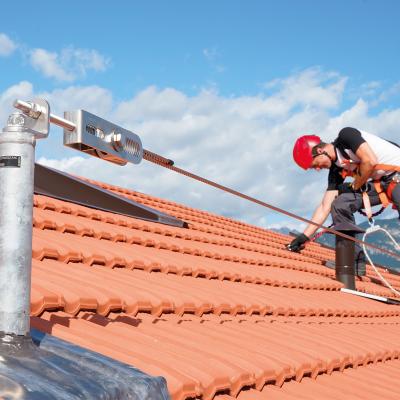
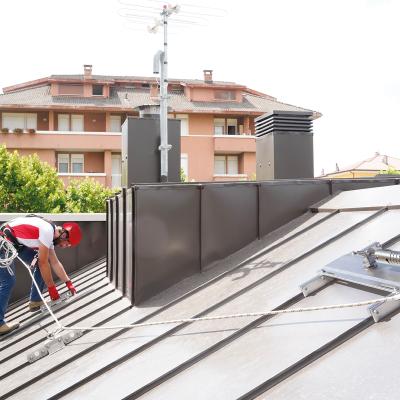
It is now official: as of 6 February 2026, EN 17235:2024 has been harmonised and formally incorporated into the European regulatory framework for construction products. This represents a major milestone for the fall-protection sector, as it introduces – for the first time – a dedicated harmonised technical standard specifically addressing permanent anchor devices and safety hooks installed on roofs.
The standard has therefore been published in the Official Journal of the European Union and is formally linked to Regulation (EU) 305/2011 (CPR). In practical terms, compliant devices can now be CE marked according to uniform criteria across Europe, bringing to an end a long period marked by non-harmonised standards, national requirements and interpretations that were not always consistent.
Anchor kits at the heart of the new classification
The scope of EN 17235:2024 is focused on permanent fall-protection systems incorporated into roofs and building structures. Temporary anchor devices compliant with EN 795:2012, as well as collective protection measures, are excluded.
One of the key innovations is the new classification of systems. Devices previously divided into TYPE (A, B, C, D, E) are now grouped into four main categories:
Kit A – Anchor kit incorporating a single anchor device (anchor point);
Kit B – Safety hook;
Kit C – Horizontal wire anchor line;
Kit D – Horizontal rail anchor line.
Each fall-protection kit is assessed as a fully integrated system, covering the anchor device, fixings and the supporting structure. This approach moves beyond the assessment of individual components, introducing an evaluation far more consistent with real-world performance in use. The new standard also defines updated load values, based on the number of simultaneous users (up to two for Kits A and B, and up to four for Kits C and D). The assessment includes both dynamic testing and ultimate load testing, significantly strengthening the safety requirements for permanent systems.
Durability and performance in outdoor environments
The standard places particular emphasis on the long-term durability of permanent anchor devices. Specifically, EN 17235:2024 requires compliance with:
durability/corrosion resistance;
watertightness;
These aspects are essential to ensure site safety not only during installation, but throughout the entire service life of the building. Finally, the standard strengthens the Assessment and Verification of Constancy of Performance (AVCP) system by imposing more stringent controls on manufacturing processes, initial type testing and documented product traceability, providing additional safeguards for both the market and the professionals who design and install compliant fall-protection systems.
To allow manufacturers, designers and notified bodies to adapt their processes, technical documentation and certifications, EN 17235:2024 introduces a transition period lasting until August 2027. During this time, the new standard will coexist with certain existing regulations – such as EN 795:2012 – to allow a gradual transition to the new harmonised regulatory framework.
Rothoblaas' role within the CEN standardisation group
The harmonisation of EN 17235:2024 is particularly significant for Rothoblaas, not only as a manufacturer of fall arresters, but also as an active participant in the European standardisation process. Rothoblaas engineers, acting as experts and Italian representatives, took part in the CEN/TC 128 SC9 WG1 working group of the European Committee for Standardization (CEN), responsible for studying, discussing and drafting the standard. The group’s final meeting prior to harmonisation took place at the Rothoblaas headquarters, where the company hosted experts from across Europe and carried out practical fall-protection tests that contributed to the technical exchange underpinning the new standard. Through its long-standing participation at European level, Rothoblaas has actively contributed to shaping safety requirements, drawing on its experience in the design and manufacture of fall-protection systems. Being actively involved in the development of the standard ultimately helps raise the overall quality of the sector.
A new chapter for permanent fall-protection systems
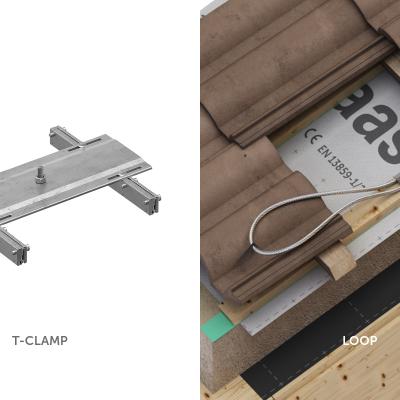
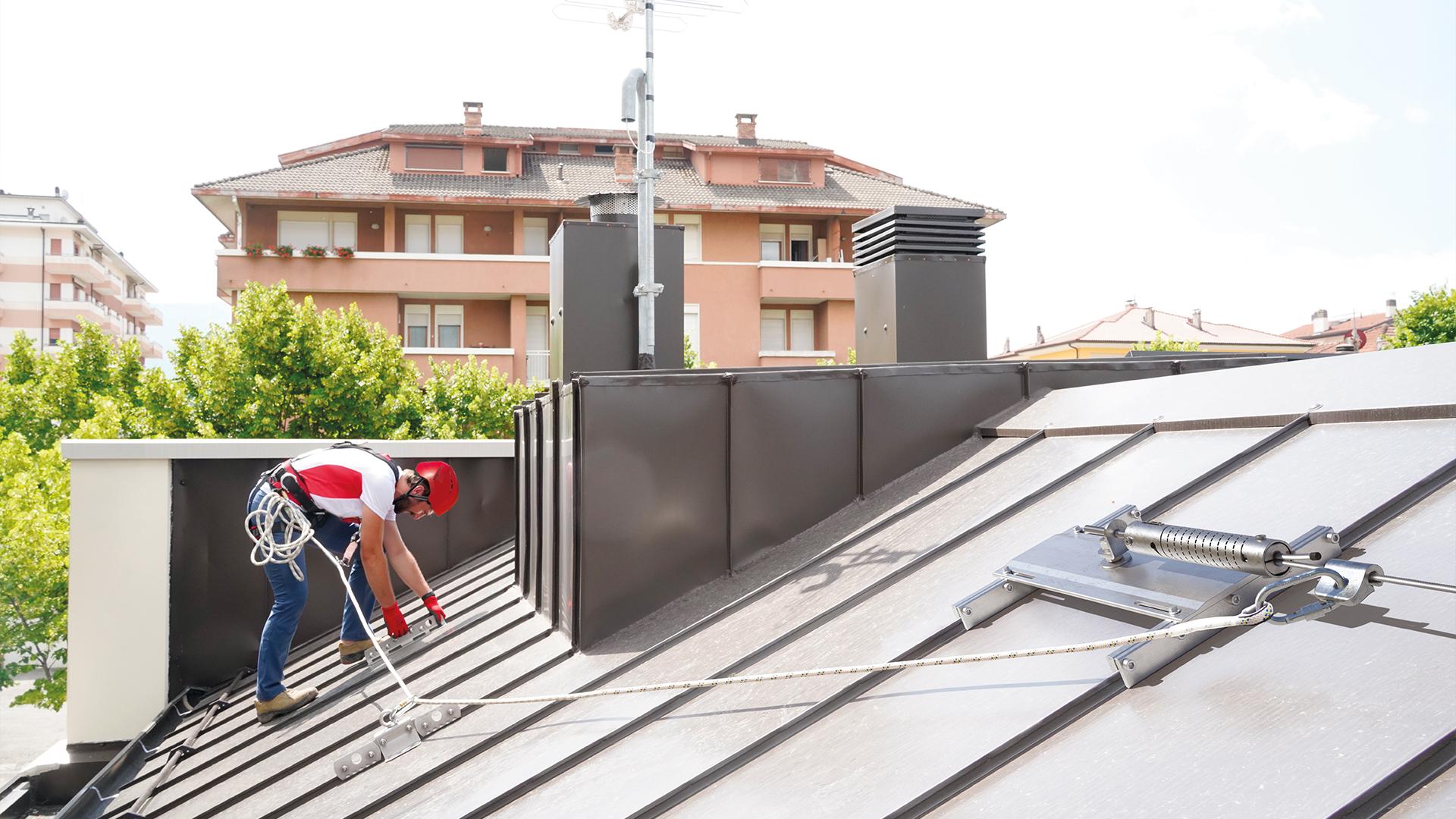
The harmonisation of EN 17235:2024 thus marks the beginning of a new chapter in the European market for permanent anchor devices and lifelines. The introduction of harmonised criteria strengthens operator safety, improves technical transparency and increases the level of control over manufacturing processes. Within this context, systems such as PATROL and H-RAIL – lifelines with cable and rail respectively, designed for permanent roof installations – fully fall within the scope of the new standard. Both systems are designed to ensure smooth movement, controlled management of loads and adaptability to different structural configurations. These lifelines are typically integrated with dedicated structural supports such as TOWER, SHIELD and T-CLAMP, which are engineered to correctly transfer loads to the load-bearing structure and ensure stability even when used by multiple operators at the same time.
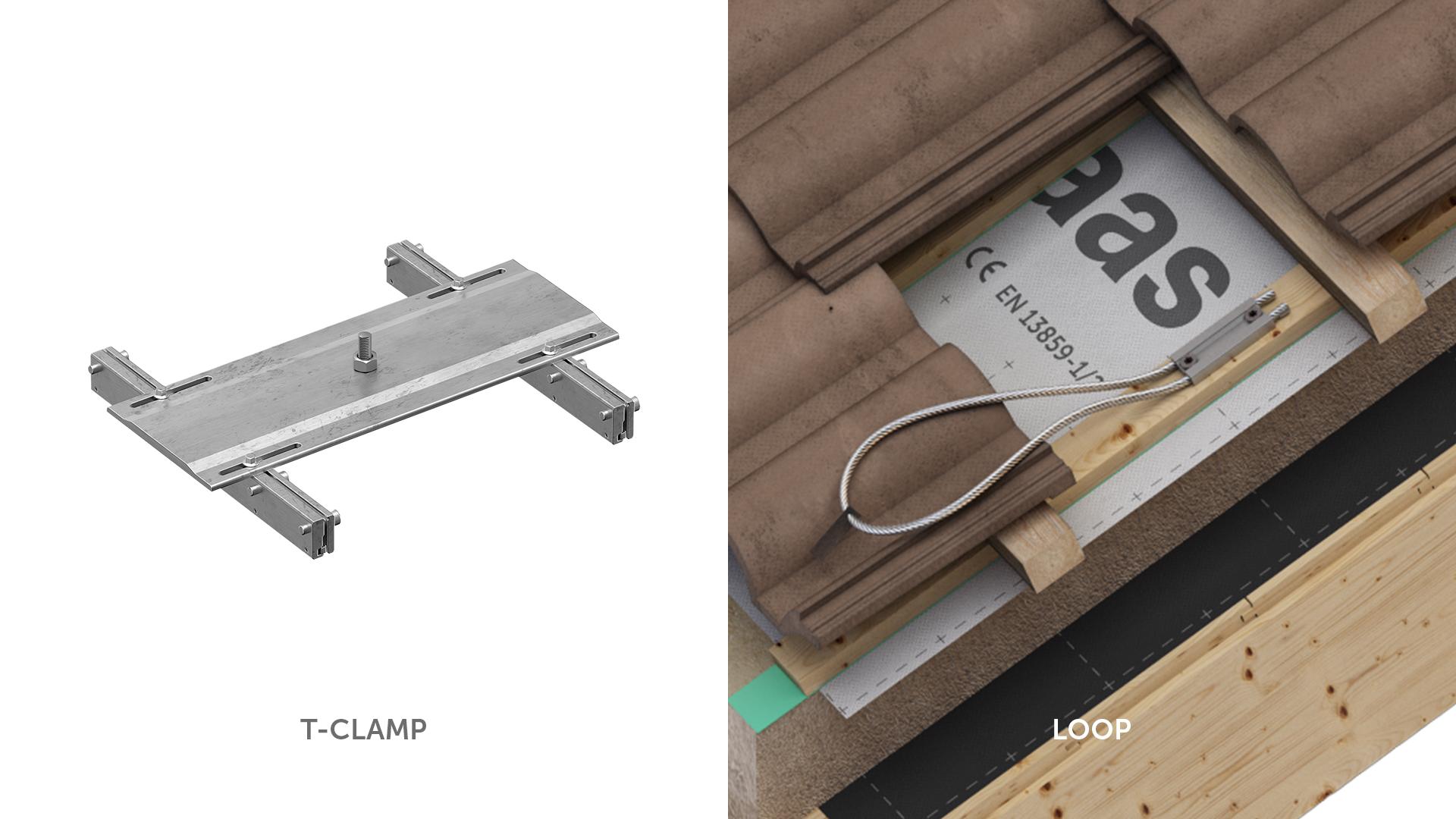
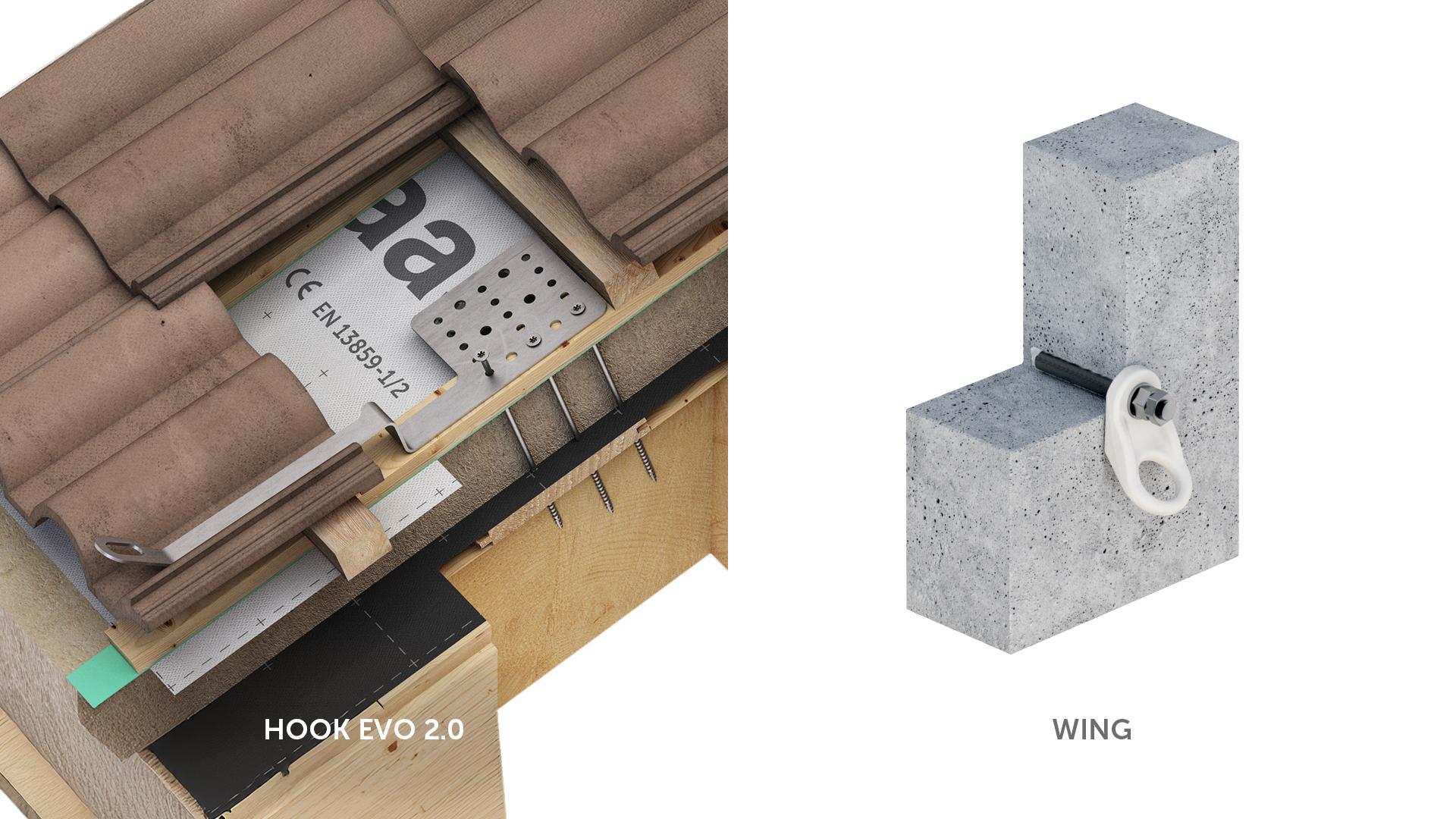
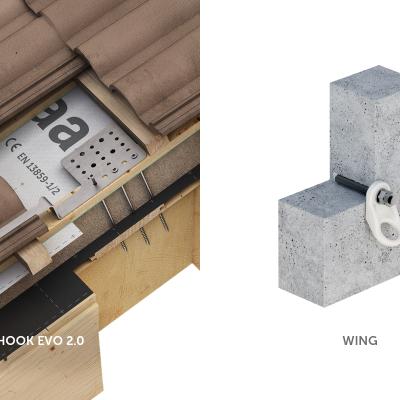
Alongside linear systems, the regulatory scope also includes permanent anchor points such as LOOP, HOOK EVO 2.0, KITE and WING.
LOOP is a compact anchor point, ideal for installation on roofs in historic centres and on timber, concrete, and concrete and masonry structures.
HOOK EVO 2.0 is a safety hook designed for pitched roofs, featuring an opening compliant with the dimensional requirements of the standard.
KITE and WING are anchor points developed to deliver high mechanical performance, ensuring compatibility with different types of supports.
With EN 17235:2024, these systems are no longer assessed as isolated components, but as complete structural kits in which anchor devices, fixings and supports all contribute to overall performance.
For the fall-protection sector, this ushers in a period of greater regulatory clarity and technical accountability. Harmonisation is not merely a legislative update, but a step towards more consistent, verifiable standards that are firmly focused on real safety in roof applications.
All rights reserved